Collection Of All Spiritual Stuffs.

Showing posts with label Ashrams. Show all posts

Rambhapuri Peeta, Balehonnur Rambhapuri Mutt

with 0 Comment
Rambhapuri Peeta, Balehonnur Rambhapuri Mutt
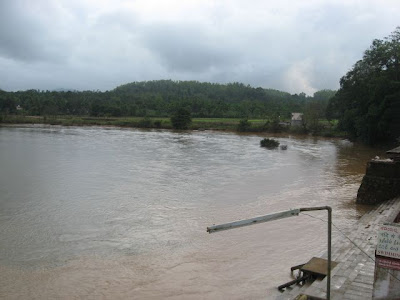
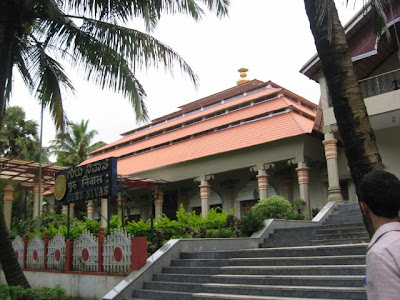
Rambhapuri Mutt or Jagadguru Rambhapuri Veerasimhasana Mahasamasthna Peeta is situated on the banks of River Bhadra in Balehonnur in Chikmagalur district.
The Veerabadra temple attached to the Mutt has strong metallic images of Veerabhadra and Bhadrakali.

Jagadguru Renukacharya established Rambhapuri Mutt during early stage in Kruthayuga. Located on the banks of Bhadra river in Narasimharajapura (N.R Pura) taluk of Chickmagalur district, Rambhapuri Peeta is a pilgrimage centre especially for Veerashivas/Lingayath community. As per Legends and Shivagamas Jagadguru Renukacharya received instructions from Lord Shiva and took birth on this earth to spread right spiritual consciousness.

Jagadguru Renukacharya travelled widely to spread Veerashaivism, the locations where he stayed became spiritual awakening centers plus worshipped with great devotion even in the present day. Numerous scholars believe that Renukacharya was the originally the founder of Veerashaivism.

Jagdguru Renukacharya during this Kaliyuga with synonymous name of Revanasiddha blessed Shankaracharya with Chandramouleshwara linga and Rathnagarbhaganapathy, hence bringing communal harmony. Revanasiddha travelled from Kashmir to Kanyakumari to expand Veerashaivism. From then, the heritage of Rambhapuri Peeta is continuing to work for the victory of human to bring peace to world via religion.

Many rulers who ruled the state like Chalukyas, Hoysalas, Rashtrakutas, Gangas, Vijayanagara, Keladi as well as Mysore Wodeyar families has recognized the priceless service done by Rambhapuri Peeta in the field of religion as well as social service, they have reverred the Rambhapuri Peeta with a good amount of donations to continue the service.

The present Jagdguru Prasannarenuka Veerasomeshwara Rajadeshikendra Shivacharya Bhagavatpada ascended the Peeta as the 121st pontiff on 06-Feb-1992.

Rambhapuri Peeta, Balehonnur Rambhapuri Mutt
Shri Jagadguru Renukacharyaji, who sprang from Someshwar Linga at Kollipaki in Andhra Pradesh, established the Rambhapuri Peetha in Karnataka and this is 1st among the Pancha Mahapeethas of Veerashaivism.

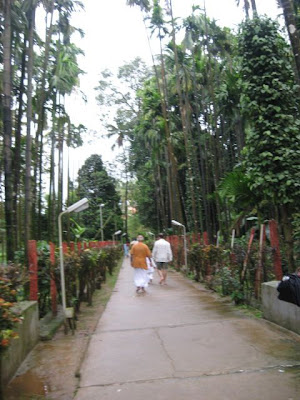
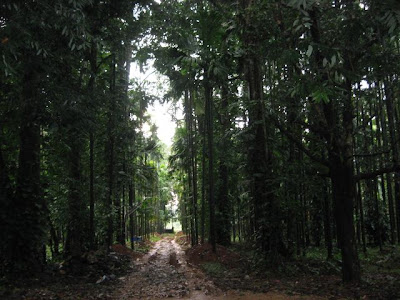
The Rambhapuri Peetha is located at Balehonnur, Chikkamagalur District, Karnataka, which is popularly known as the Kashmir of Karnataka, due to its natural scenic beauty.

Shri Jagadguru Renukacharyaji's conquest over religion started from Kollipaki to Malayachala (the vernacular name for Balehonnur) . He traveled all the way from Kollipaki to Malayachala or the present Rambhapuri Peetha at Balehonnur, where the great Maharshi Agastya Muni was anxiously waiting to receive him. Shri Jagadguru Renukacharya preached him the 101 STHALAS of the “ Siddhanta Shikhamani” the religious book of Veerashaivism. We have already seen enough evidences for the rich heritage of Veerashaivism & its long lineage.

Rambhapuri Peetha is a heaven on earth, which is located on the banks of river Tunga and rich in its landscape, beauty with ever green flora and fauna. Its serenity and holistic spirit has made the people to pour in form all the parts of India , as also from rest of the world.

History of Panchapeethas :

PANCHACHARYAS:
The tradition of Virasaiva sect was founded by five ascetics- Revana, Marula, Ekorama, Panditaradhya, Vishwaradhya- who are held to have sprung from the five heads of Shiva, incarnate age after age, almost about 5500 -6000 years ago. These are regarded as very ancient, and Basava is said to have been but the reviver of the faith in 12th century. Yet the early literature shows that the five were all his contemporaries.

`The great gotrakaras established five great religious centers in different parts of India. Ekorama at Kedara in the Himalayas, Vishweswara at Banaras, Marularadya at Ujjain, Panditaradya at Shrishail, Renukacharya at Balehonnur…’ -M.E.Tharstan : Castes and Tribes of South India p-264-265

And also mentioned by Dr. J. S. Pharkuhar in The Religious Quest of India as follows;
`The tradition is that the Virasaiva sect was founded by five ascetics Ekorma, Panditaradya, Revana, Marula and Viswaradya….’

According to popular view, and one backed by historical and literary evidence, the Lingayat or Veerashaiva sect was founded by the Panchacharyas or the Five great Prophets. This view however, is in the realm of mythology and is supported by historical and literary evidence those are available at Allahabad High Court and Jangamwadimath of Kashi.

The Panchacharyas are the five Gurus who incarnated directly form five faces of the Sivalinga and established the Virasaiva religion and Philosophy. Hence they are called as Lingodbhavas. Those five faces of linga called as namely Sadyojata, Vamadeva, Aghora, Tatpurus and Isana. With the following names Revanaradhya, Marularadhya, Ekoramaradhya, Panditaradhya and Vishvaradhya. These five Acharyas are the Gotrapurusas (pioneers) of the Virasaiva religion. The five Gotrapurusas belongs to the five Gotras namely Veera, Nandi, Bhringi, Vrishabha and Skanda respectivily. These Panchacharya ruled the realm of Virasaiva kingdom by establishing the five peethas in different places in India as follows :

Veeashimhasana of Rambhapuri in Balehonnuru (Karnataka)
Saddharma Shimhasana of Ujjain (Karnataka)
Vairagya Shimhasana of Kedar (Uttaranchal)
Surya Shimhasana of Shrishaila (Andhra Pradesh) and
Jnana Shimhasana of Kashi (Uttar Pradesh)

Those Panchacharyas are called as:

•Renukacharya
•Marularadhya
•Ekoramaradhya
•Panditaradhya and
•Vishvaradhya

Address:

Jagadguru Rambhapuri Veerasimhasana Mahasamasthna Peeta
Ballehonnur, Chikmagalur
Karnataka
Pincode : 577112
Phone : +91-08266-250424

Sri Marula Siddeshwara Swamy Temple / Kuppuru Gadduge Mutt

with 1 comment
Sri Marula Siddeshwara Swamy Temple / Kuppuru Gadduge Mutt
The Kuppuru Gadduge Mutt is situated near Kuppur, a village in the Chikkanayakanahalli taluk of Tumkur. Amidst the flowing waters and the coconut grooves, behind the hills and river, shines this temple in a peaceful and pleasant surrounding/atmosphere.

This Mutt, the abode of nature, is the bright shining place of Sri Guru's Samadhi. The Great Guru who rests in this Samadhi is Sri Marula Siddeshwara Swamy! He is always here to accept the prayers and poojas of his devotees throughout the day, and to bless and make their wishes come true.

About 300 years ago, there lived a couple by name Basavalingaradhya and Smt. Sidhambe, who were whole and soul involved in the Lord's/Shiva's pooja, prayers, meditation and also in serving the Gurus and Jangamas in the Niduvalli Mutt. This religious couple, were followers of the Veerashaiva sect and were always involved in vrathas/poojas. They would serve elders, Gurus and the rest of the guests as they would serve the Lord himself. This peaceful couple, who were always serving and taking care of the Jangamas also had one worry/botheration - not about food, not about clothing… but, as to who would be the future doers/servers/successors of the Niduvalli Maha Mutt?

One day, when Basavalingaradhya had taken his cattle grazing outside the Shiva temple, Lord Shiva himself as a Guru/Yati, called him and said: "Child, I am feeling very hungry/starving, I love ragi ball and Arive soppu/greens curry, will you feed me"? Basavalingaradhya was the happiest. Bowing and thanking the Guru/Yati, he ran home saying he would bring his choice of prasaadam by the time the Guru had his bath and was done with his pooja. Both husband and wife Sidhambe, very happily, grandly, cleanly, cooked the prasaadam as told by the Lord. They took the entire cooked food to the Shiva temple and served the Lord (in the form of aYati), his favorite Arive soppu curry and ragi ball. (Whole heartedly) satisfied, the Jangama offered/gave the rest of the prasaadam to the couple who were sitting very politely in front of him. The couple felt very thankful and happy in accepting the remaining prasaadam. The Jangama said: "Children, don't worry that you don't have children, you will bear a part of the Lord (chinmayaamsha) for a child. Name the child Marula Sidda, he will be the successor of this Mutt. In the future, he will be the light for the entire universe; he will drive away the sorrows of one and all, and will help in bringing about success and happiness to the people in need. He will be famous and well known as Mahatma Marula Sidda! Don't worry, be calm", saying this, the Jangama disappeared/vanished.

Bearing Lord Shiva's (chitkale) in her womb, the pious/lucky lady Sidhambe, always involved herself in Lord Shiva's bhajans, meditation, and did all good deeds that were possible. She served the Jangamas without fail.

Mother Sidhambe gave birth to a baby boy after completion of nine months, and they named this child Marula Sidha. Baby Marula Sidha didn't have any knowledge or consideration about the outside world as he grew up like the bright moon(beladingala chandra), always deep in Lord Shiva's pooja and meditation.

Due to his previous good deed/sanskars/culture and by the blessing/grace of Shiva yogis and because he had started feeling the Shiva tatva, Marula Sidha Swamy accepted the authority of the Naduvalli Mutt at the age of 16 years itself. And from here on, he walked to Kashi, Himalaya, Gokarna, Kalyana, Ulavi, Sri Shaila, etc., and here he spent some time in meditation and dhyaan.

At the same time, he showed many miracles. A mother was crying miserably carrying here snake bitten dead child, and Sri Guru applied a little ash/bhasma on the child and the child started jumping and dancing!

River Vedavati made way for Sri Guru to carry on with his journey!

From there, Sri Guru went to Sri Sidheshwara's abode at Hirekallu Betta, to get back to his meditation.

At that point of time, there was drought/famine in the country and as per Sri Guru's wish, abhishekas and utsavas were carried out for Bettada Sidheshwara, by whose grace there were rains and growth of crops, and by this people were very happy. During this famine period, when Sri Guru visited Shashivala, there wasn't water to even wash legs (to do paada pooja), and so Sri Guru Marula Sidha showed his devotee Malanna a place and asked him to dig a well there. Even to this day, we can find Sri Marula Sidha Swamy's well at Shisuvaala, which doesn't go dry for a single day, and is always filled with clean water. An officer named Hyder Khan of Chikkanayakanahalli asked Sri Guru to bless him with a son, and Sri Guru gave him a pomogranate (daalimbe) to be given to his wife, and after having done so, his wife got pregnant and gave birth to a child.

He, Guru, healed many (Kushta rogis) by just touching them with his gracious/pious hands.

This way, devotees at Huliyaaru, Kenkere, etc., were graced by Sri Guru. From there on, he went to Mallikarjuna Betta and did his meditation for a while and as he was in the Shivayoga Samadhi, his devotees prayed to him and hence he came down to Settikere which was also drought/famine hit at that time, and there, he offered abhishekas and archanas to the Panchalingas which were in the middle of the village river/kere, and thus the village and the villagers got rid of the drought. Sri Guru blessed the people in the village and returned to Mallikarjuna Betta.

Later on, he felt that the place behind Kuppuru river was most pleasant for his meditation/tapassu, and so he got an underground/nelamaalige dug by his devotees at the school/poorna shale, and he permanently settled down there for his meditations/ yoga samaadhi yalli, shiva yoga.

Even after entering the Samadhi, Sri Guru showed his presence to Hyder Khan in the form/way of lifting a tumbe flower.

This way, Marula Sidheshwara Swamy blesses his devotees as he moves about/sancharisuvaaga, and also relieves them of their pains and sorrows and shows them the right path, thus overall helping mankind and the society!

Location:

This mutt is situated in a small village called Kuppuru, which belongs to Chikkanayakanahally Taluk in Tumkur District. This place is full of coconut trees and a pond that flows with full of gushing round where the Shri Guru's Samadhi is located. This Samadhi itself is the Mahaguru Sri Marulasiddeswara Swami's Samadhi. Here the disciples come taken this darshan and blessings and Offer their prayers.


Address & Contact Details

Sri Sri Yateeshvara Shivaachaarya Mahaaswaamigalu
Sukshetra Kuppuru Gaddide Samsthana Mutt,
Kuppuru, Chikkanayakanahally Taluk,
Tumkur District, PIN - 572 226

Tel: +91 08133 - 269533 / 08133 329 363 / 9379132155

Srimad Jagadguru Sri Kudali Sringeri Shankaracharya Mahasamsthanam Dakshinamnaya Sri Sharada Mahapeetham

with 3 comments
Srimad Jagadguru Sri Kudali Sringeri Shankaracharya Mahasamsthanam Dakshinamnaya Sri Sharada Mahapeetham
Sri Kudali Mahakshetra is a small village situated 14km from the district centre of Shimoga, in Karnataka state of India. One can reach this place by travelling up to Shimoga both by rail or road and thereafter by road alone. The road from Shimoga is a fairly good and motorable one.
Those who travel by their own vehicle, can also reach this place via Tarikere, Bhadravathi and Holehonnur. The greenary all around makes the journey a pleasant one.


Srimad Jagadguru Sri Kudali Sringeri Shankaracharya Mahasamsthanam Dakshinamnaya Sri Sharada Mahapeetham
Kudali main centre, a small village is located 14 km north east of the district centre of Shimoga in Karnataka state. River Tunga enters the village from south and flows westwards. The river Bhadra enters from the South-East, through Holehonnur, flows east of the village and converge with Tunga, flows northwards, thereafter is known as Tungabhadra. In Hindu scriptures, this place was called as Yamalapuri. These two rivers viz., Thunga and Bhadra originate in Varaha Mountains in Sahyadri range of Western ghats, encircle the village Kudali and flow as a confluent thereafter. This is why this place is known as Kudali, which means confluence of two rivers.

This kshetra was the Tapobhoomi (meditation land) of the famous sage Galava. It is claimed in the puraanas (legends) that Tunga was the visage of Narayana, while Bhadra that of Shiva.

At the point of confluence of these two rivers, there is a “Udbhavalinga” (Linga rises on its own from the earth) called “Sangameshwara”. On the banks, there is a temple of Ramanathalinga, as well a temple of Vishnu who blessed his renowned devotee Prahalada in the form of a miniature sized “Chitamani Narasimhaswamy”. At the southern end of the village there is a temple of Brahmeshwara established by Lord Brahma himself.

Srimad Jagadguru Sri Kudali Sringeri Shankaracharya Mahasamsthanam Dakshinamnaya Sri Sharada Mahapeetham
This kshetra is also well known as, ‘Narasimhakshetra’ as one of the deities is ‘Narasimhaswamy’, ‘Dakshina Varanasi’ (Banaras of the south) due to the existence of a temple of ‘Lord Shiva’ on the banks and called Mahaprayaga, due to the confluence of the two rivers.

Srimad Jagadguru Sri Kudali Sringeri Shankaracharya Mahasamsthanam Dakshinamnaya Sri Sharada Mahapeetham
There exists a hill to the east of Sangam. Now it is known as Bhairanabetta. There is a temple of Kalabhairava on the hill. Thus the name for the hill. This was known as Dronaparvatha in the ancient purana (legends). This Kudali kshetra has an impact over a distance of six kilometers that includes the hill. Generally the Kshetramahime (Speciality of the place) is restricted to the physical area of that particular kshetra. However, it is said in the puranas (legends) that the Kshetramahima of this place is spread over a distance of 6 km (Knosa dwaya), there by indicating the greatness of this Holy place. Building of Sri Kudali Sringeri Dakshinamanya Sharadapeetham and the temples of the deities of Sri Sharadamba and Sri Vidyashankara are located close to Sangama.

History of Sri Kudali Sringeri Sharada Peetham :

Srimad Jagadguru Sri Kudali Sringeri Shankaracharya Mahasamsthanam Dakshinamnaya Sri Sharada Mahapeetham
Srimachhankara Bhagavatpada defeated Mandana Mishra believed to be the incarnation of Brahma and his wife Ubhayabharati, incarnation of godess Saraswathi, in a debate. As per the terms of the debate, defeatist Mandana Mishra renounced the world and became the disciple of Sri Shankara and was renamed as Sureshwaracharya. Ubhayabharati decided to return to her world since Mandana Mishra renowned the world. At that moment Sri Shankara bonded her with Vanadurga verses and prayed her to settle down at the proposed Dakshinamnaya Peetham in the south. She consented to the request with a condition that she would be following Sri Shankara, but would not move further if he looks back. At Kudali Sangam, since the Acharya did not hear the sounds of the auklet bells of Ubhayabharati, he looked back with anxiety. The next moment Ubhayabharati stood her grounds as if rooted as per the terms of agreement. Since then she has settled down in that very place and is being worshipped as Sharadadevi.

From this unexpected incident, as Sharadadevi decided to stay at Kudali, the Acharya again prayed her to go along with him to Sringeri. Accepting his request, Sharadadevi agreed to reside in Sringeri with complete grace only during Navaratri festival and symbolically on other days. Accordingly, even as on now, Sharada is in a sitting posture in Sringeri.

Sri Adishankara established four monasteries in the four directions of the country and assigned a pontiff to each one of them for the smooth functioning of Vaidika dharmoddhara work. In the south, he established Sharadapeetha at Sringeri for the Propagation of Yajurveda and assigned this responsibility to Sri Sureshwaracharya, who thus became the First pontiff.

Under this tradition, Sri Narasimha Bharati III enthroned the peetha at Sringeri as 46th Pontiff in 1546. From 1546 to 1556, he stayed at Sringeri, looking after the responsibilities of Sharada Peetha. In between, as per the tradition of the mutt he selected a disciple, induced him to renunciation initiation and christened him as, “ Sri Vidyaranya Bharati Swamigalu”.

The senior swamiji then decided to visit all the holy places and left Sringeri in Nala Samvatsara in 1557AD, on a pilgrimage. Before leaving, he made all the necessary arrangements for the smooth functioning of the mutt and handed over all the responsibilities to Sri Vidyaranya Bharati Swamiji.

The senior pontiff, after leaving Sringeri, visited one after another-holy places and spent almost 20 years in pilgrimage. Back in Sringeri, the concerned did not get any message about the whereabouts of the senior pontiff for almost 12 years. During this period, there was fall of Vijayanagar Empire. This brought problems to Sringeri mutt and to its properties. Due to the misunderstanding between the locals and the junior swamiji, he left Sringeri to Kudali where he started living in the old mutt.

Thereafter, the management of the mutt and a few leaders thought that the absence of a pontiff is an insult to the mutt and hence brought a new person to head the mutt and christened him as Sri Ramachandra Bharati Swamiji and accepted him as their guru.

In 1576 Sri Narasimha Bharati III while returning to Sringeri after 20 years of pilgrimage, touched Kudali and rested there. Surprisingly, he met his disciple and the successor Sri Vidyaranya Bharati Swamigalu, to whom he had handed over the reins of the mutt at Sringeri, and learnt all the developments. Since this was the place where Sharadamba first stayed, he decided to stay there and did so accordingly.

In no time, the news of Sri Narasimha Bharati III staying at Kudali spread everywhere the surrounding Paalegars (Chieftains) as well as his disciples came rushing for his darshan. They informed the senior pontiff about the happenings at Sringeri and also about the new pontiff. The chieftains and the disciples requested him to stay at Kudali and bless them. They also promised to provide all the required amenities to the pontiff.

While this was the general opinion of his followers, the pontiff too, did not wish to hurt their feelings. Moreover, the junior pontiff, whom he had picked and initiated to the peetha, was already staying there. More than anything else, the service atmosphere, natural beauty, the two rivers and their confluence attracted him and the virtual presence of Sri Sharadamba drew him close to that place. Ultimately he decided to stay in Kudali.

The disciples felt happy after knowing the decision of the senior pontiff. The chieftain of Basavapattana Sri Hanumappa Nayak got built a big building for the mutt and temple to Sri Vidyashankara and also donated fertile lands. The other chieftains followed suit, built several buildings and enhanced the assets of the mutt.

Thus, as the mutt received new buildings and land, with the full co-operation of the disciples, the swamiji arranged special poojas in the local temples, performed Mahabhisheka and Special Poojas to Sri Vidyashankara, Valukaparameshwara, Ratnagarbhaganapathi and did Annadaana to all section of the society. Then, in the presence of learned men, chieftains, special invitees and the followers of the mutt established Dakshinamnaya Sri Jagadguru Sharadapeetham in Kudali permanently on 22.10.1576, the day of Karthika shukla balipadyami. The Kudali Sringeri Mahasansthanam is permanently stationed there since that day.

This peetha started growing as a centre for the propagation of principles of Advaitha and serving as a guiding light to the followers all over the country

Image Credits: Rameshjs

Contact Details and Address of Sri Kudali Sringeri Kshetra :
The Officer:
Srimad Jagadguru Sri Kudali Sringeri Shankaracharya Mahsamsthanam.
Dakshinamnaya Sri Sharada Mahapeetham
Kudali-577 237
Shimoga District
Karnataka State
INDIA
Phone No: 08282-235319
E-mail : contact@kudalimutt.org
Website : www.kudalimutt.org

Important Point From Guruji Sri Narendra Babu Sharma:
First Visit Sri Kudali Sringeri Shankaracharya Mahsamsthanam.
Then Visit Sri Sringeri Sharada Peetham.
Sri Kudali Sringeri is the Moola Sthana of Goddess Sharadamba, this is reason behind visiting Sri Kudali Sringeri First.

Update: Difference Between Kudali Sringeri and Sringeri:
Kudali Sringeri:
Goddess Sharadha is in Yantra Swaruppa.
Here Goddess is Facing in North (Uttara) Direction.
Here Goddess idol is made up of stone.
Goddess Niluvaambha Sharadha Stays Here.

Sringeri:
Goddess Sharadha is in Mantra Swaruppa.
Here Goddess is Facing in East (Purva) Direction.
Here Idol of Goddess is not made up of Stone.
Only on occasion of Navarathri Goddess Sharadha Stays here.


Sri Sri Jagadguru Shankaracharya Mahasamsthanam Dakshinamnaya Sri Sharada Peetham - Sringeri

with 0 Comment
Sri Sri Jagadguru Shankaracharya Mahasamsthanam Dakshinamnaya Sri Sharada Peetham - Sringeri
Sringeri – one of the four sacred institutions established by great Âdi Sankara, centuries ago, to promote the growth of Sanâtana Dharma (Eternal Virtue of Hinduism). Its main temple is that of Siva who’s called Candramoulîsvara and also has a temple for Goddess Sarasvatî who’s called Sâradâ.
Adi Shankaracharya is said to have stayed here for twelve years and selected the site as a place to stay and teach his disciples. He established the first Shankara Mutt (out of the four Shankar Mutts in India) which is popularly known as the Jagadguru Sri Shankaracharya Mutt of Sringeri or Sri Sringeri Sharada Peetam.


Sri Sharadamba Temple


Sri Sri Jagadguru Shankaracharya Mahasamsthanam Dakshinamnaya Sri Sharada Peetham - Sringeri
The ancient temple of Sri Sharada, the presiding deity of Sringeri has a glorious history that begins with the setting up of the Dakshinamnaya Peetham by Sri Shankara Bhagavatpada. Originally it was an unpretentious shrine with the Murti of Sharada made of sandalwood, installed over the Sri Chakra that Sri Adi Shankara carved on a rock. Subsequently Sri Bharati Krishna Tirtha and Sri Vidyaranya had a temple built in the Kerala style, with timber and tiled roof. Sri Bharati Krishna Tirtha substituted the sandalwood idol with the present golden idol.

Sri Sri Jagadguru Shankaracharya Mahasamsthanam Dakshinamnaya Sri Sharada Peetham - Sringeri
A form of the goddess of learning, Saraswati, Sharadambal is the main deity revered by the gurus of Sringeri…. This is a comparatively recently-built temple, the original one being first a simple shrine with the deity and later enlarged by successive gurus. The present temple is a beautiful one, with the idol being even more beautiful….. On Fridays, she is decorated as Saraswati with the Veena in her hand, and it is a sight to behold!

Few Words From Guruji Sri Narendra Babu Sharma:
For Success in Education, Offer Aksharabhyas Seva for goddess Sharadamba, by offering 1000 varahas i.e 1000 Rupees.

Darshan Timings:
Morning - 6:00 AM to 2:00 PM
Evening - 5:00 PM to 9.00 PM

Sri VidyaShankara temple


Sri Sri Jagadguru Shankaracharya Mahasamsthanam Dakshinamnaya Sri Sharada Peetham - Sringeri
The Vidyashankara Temple built in the 14th century (1338)is dedicated to Lord Shiva . The temple stands almost at the entrance to the River Tunga and is an architectural marvel. A fusion of Hoysala, Chalukya, Vijaynagar and Dravidian styles, this temple was built by the pontiff, Sri Bharati Krishna Tirtha Acharya, as a tribute to his Guru, the 10th Acharya, Sri Vidyatirtha during the reign of the brothers ,Harihara and Bukka, the founders of the Vijaynagar empire. His brother and succeeding Acharya Sri Vidyaranya was the Guru of the Vijaynagar Empire, founded in 1336 which had its capital in Hampi.

Sri Sri Jagadguru Shankaracharya Mahasamsthanam Dakshinamnaya Sri Sharada Peetham - Sringeri
The temple has twelve pillars adorned with sculptures and they represent the twelve zodiac signs and it is said that they are placed in such a way that the rays of the sun fall on each of them in the order of the calender or the twelve solar months.One cannot miss the stone rings that hang in the shrine which is seen in most monuments built during the Vijaynagar period. The sculptures on the ceilings, walls and even the floor are all depictions of the various puranas . Another temple is said to be buried beneath this temple and there is a story around it .

Sri Sri Jagadguru Shankaracharya Mahasamsthanam Dakshinamnaya Sri Sharada Peetham - Sringeri
Sri Vidyatirtha was the reigning Acharya in the 13th century when two brothers from Ekasilanagaram or today's Warangal came to meet him. While the younger brother renamed as Sri Bharati Krishna Tirtha stayed with him, the older, Sri Vidyaranya travelled to spread the doctrines .Sri Vidyatirtha wanted to meditate and he explained to Sri Bharati Krishna Tirtha that his body would assume the shape of Chaturmurti Vidyeshwara after twelve years of yoga.

An underground chamber was excavated near the bank of the river Tunga and the pontiff went into meditation with the instruction that no one should open the door for twelve years .After three years, when Sri Bharati Krishna Tirtha was away, the attendants out of curiosity opened the chamber only to see that the body was no longer there, but there was a linga in its place . Sri Bharati Krishna Tirtha was upset over the incident , but he received a message from his Guru to build a temple there and call it the Vidyashankara temple .Sri Bharati Krishna Tirtha succeeded Sri Vidyatirtha as the next Acharya and he was followed by his brother, Sri Vidyaranya.

The river Tunga


Sri Sri Jagadguru Shankaracharya Mahasamsthanam Dakshinamnaya Sri Sharada Peetham - Sringeri

Narasimha Vanam


Sri Sri Jagadguru Shankaracharya Mahasamsthanam Dakshinamnaya Sri Sharada Peetham - Sringeri
The other side of the bridge is in total contrast to the city-side. Here, the area has been allowed to grow wild in a controlled manner, and normally, one finds peacocks and deer in plenty. Now, though they have been moved to a safer area for the monsoon, it is here that one can see nature at its best – this place is called ‘Narasimha Vanam’

Sri Sri Jagadguru Shankaracharya Mahasamsthanam Dakshinamnaya Sri Sharada Peetham - Sringeri

Sri Sri Jagadguru Shankaracharya Mahasamsthanam Dakshinamnaya Sri Sharada Peetham - Sringeri
The Guru Nivas…… it is here that the Acharya gives darshan every morning and evening, and it is here that her himself performs the puja every night. This puja begins at 8:30 PM and lasts till 10:30PM, but it well worth the effort of staying awake late..

At last comes the Story behind Sringeri:

Sri Sri Jagadguru Shankaracharya Mahasamsthanam Dakshinamnaya Sri Sharada Peetham - Sringeri
Tradition has it that after the Acharya had dispersed all the non-Vedic creeds prevailing in the country, He was on the look-out for a convenient and holy place where he could establish an institution to spread the truths of Advaita Vedanta. When the Acharya came to Sringeri, he saw an unusual sight on the banks of the Tunga. A cobra was seen spreading out its hood over a frog in labour pains, to give it shadow from the scorching mid-day sun. Struck with the sanctity of the place, which could infuse love between natural adversaries, the Acharya chose this very location to establish His first Math.

How to reach Sri Sri Jagadguru Shankaracharya Mahasamsthanam Dakshinamnaya Sri Sharada Peetham - Sringeri
Sringeri, one of the foremost Shakthi Sthalas of India, lies in the Western Ghats in Karnataka, 150 km from Mangalore and 350 km from Bangalore

By Bus:
The KSRTC (State Owned Transport) operates buses from all major cities to Shringere and Shimoga. Tickets can be booked from online vendors, KSRTC offices or online at www.ksrtc.in There are also a good number of buses and private transport from Shimoga town to Shringeri.

By train
Shimoga or Kadur is the nearest railway stations and is linked to Bangalore. An alternate town is Koppa. The Shimogha Express (Train Number : 6227) runs from Bangalore to Shimoga. The train departs from Bangalore (Station Code : SBC) at 2340 hrs and arrives at Shimoga, next day at 0513 hrs. The train can also be boarded in Bangalore at Yeshwantpur and Malleswaram.

A similar train - Bangalore Express (Train Number : 6228) departs Shimoga (Station Code: SME) at 2205 hrs and arrives at Bangalore (Station Code : SBC) at 0500 hrs next day. Both trains run on all days in a week.

By Plane / Nearest Aiport
The nearest airport is Mangalore (110km from Sringeri). Deccan / Kingfisher / Jet operate this route from Bangalore. Ticket costs range between INR 1800 - 2500. You can take a bus or hire a private taxi to reach Sringeri.

Sri Sharada Temple - Sringeri Info:
The Administrator
Jagadguru Sri Shankaracharya Dakshinamanya
Sri Sringeri Sharada Peetham
Sringeri - 577 139 ,
Chickmagalur District,
Karnataka, INDIA
Site:www.sringeri.net
Phone:
+91-8265-250123
+91-8265-250594
+91-8265-250192

+91 code prefix is required only for international calls originating out of India. 8265 is the STD prefix, required for all calls outside Sringeri.

Important Point From Guruji Sri Narendra Babu Sharma:
First Visit Sri Kudali Sringeri Shankaracharya Mahsamsthanam.
Then Visit Sri Sringeri Sharada Peetham.
Sri Kudali Sringeri is the Moola Sthana of Goddess Sharadamba, this is reason behind visiting Sri Kudali Sringeri First.

Update: Difference Between Kudali Sringeri and Sringeri:
Kudali Sringeri:
Goddess Sharadha is in Yantra Swaruppa.
Here Goddess is Facing in North (Uttara) Direction.
Here Goddess idol is made up of stone.
Goddess Niluvaambha Sharadha Stays Here.

Sringeri:
Goddess Sharadha is in Mantra Swaruppa.
Here Goddess is Facing in East (Purva) Direction.
Here Idol of Goddess is not made up of Stone.
Only on occasion of Navarathri Goddess Sharadha Stays here.

Sri Narayani Peedam - Thirumalaikodi - Vellore.

with 0 Comment
Sri Narayani Peedam - Thirumalaikodi - Vellore
"SRI SAKTHI AMMA"
Sri Narayani Amma was born on 3rd January 1976 to Shri. Nanda Gopal and Smt. Jothiamma. He was named as “Sathish Kumar”. The child had a distinct mark on the forehead, a Divine Symbol of “Namam” that was visible to all. Many saw this symbol as holy. Even as a primary school student Amma evinced interest only in spiritual life.


He used to participate in Poojas and Bhajans. Even absenting from school, Amma used to visit temples or places where religious activities were conducted. One day Amma was in a bus, on the way to a temple. He was sitting by the side of a window in the Bus. He was gazing the sky. Suddenly a ray of energy emanated from Amma into the sky and took the form of Goddess Narayani dressed in a white sari (This Narayani Form is in the main temple). The Goddess was adorned with ‘Sanku’ (Conch) in one hand, ‘Chakra’ (Wheel) in the second, a Lotus Flower in the third and the fourth was in a posture of showering ‘Blessings’. Soon the vision of the Goddess disappeared and the emanated energy returned back to Amma.

On 8th May 1992. when Amma was just 16, he went over to the home of an elderly lady (Amma and parents lived in a home rented out by this Elderly lady) and disclosed who Amma really was. Amma appeared before the elderly Lady with a vision of Narayani. Amma declared that henceforth his Name is ‘Sri Sakthi Amma’ (‘Amma’ – as is now called by the devotees).

Sri Narayani Peedam - Thirumalaikodi - Vellore
The Goddess in Amma spoke, “Whenever Dharma declines and Adharma rises, I take birth in the world. Now I am born here as Narayani”. "My Name is Sakthi Amma". "Amma" (Mother) is the name now fondly used by all Amma devotees. Amma is also referred to as Sri Narayani Amma. Amma is the 'Avatar' of Goddess Narayani who possesses the combined Sakthi of Goddesses Lakshmi, Durga and Saraswathi.

Amma's pujas, service, discourses etc. are all done to elevate people into the realms of spirituality. To raise humanity into Godliness is Amma's goal and Amma does this everyday. Amma now travels to different parts of the world spreading Amma's message and guiding mankind on the spiritual path. Amma's miracles and prophecies continue to alleviate people’s sufferings.


Sri Narayani Peedam - Thirumalaikodi - Vellore.


Swayambhu Temple


Sri Narayani Peedam - Thirumalaikodi - Vellore
Thirumalaikodi or Malaikodi is a small village outside Vellore in Tamil Nadu, South India. It is surrounded by mountains and lush, scenic beauty. In Thirumalaikodi, several centuries ago, the Saints and Sages (Devas and Siddhas) performed intense penance for many years to the Universal Mother (The ParaSakthi)! They prayed for Amma to descend on the Earth to protect the entire creation from the afflictions of the Dark Age (Kaliyuga).

In 1992, our beloved Arul Sakthi Amma predicted that a “Swayambhu” (a religious symbol that appears on it’s own accord) would manifest itself at Malaikodi. To prove Amma's "Sathya Vaakku ", (Divine words of Truth), a great miracle took place on the 11th September 1992.

On that beautiful evening around 6:00pm, there was a special gathering of very blessed devotees at Malaikodi. In the divine presence of our Beloved Amma, Mother Earth gave way, and there emerged a beautiful "Swayambhu". Blessed were all those who witnessed this Spectacular Divine Event and blessed indeed, is the entire creation!

Several weeks after the appearance of the Swayambhu, a "putthu" (anthill) began to emerge behind the Swayambhu. The Swayambhu temple was constructed around the Swayambhu and the anthill, and was consecrated on January 9th, 2000. Seated at the Gopuram (tower) of the Swayambhu Temple are the idols of the 18 Siddhas who had done great penance to the Divine Mother.

Today, we can see the huge anthill, inside this Swayambhu Temple. The Divine mother is in the form of a snake blessing her children with good health. She protects her devotees from diseases and bestows the boon of children to women who do not have children.

"Santhana Lakshmi " (Goddess of Children) is also installed inside the Swayambhu Temple, just behind the anthill. An Akhanda Deepam (Eternal Lamp) is always burning bright in this Sannidhi (shrine), showing light to all the spiritual aspirants. Going around inside the Swayambhu Temple bestows the devotees with the grace of the Divine Mother and the 18 Siddhas.

Amma’s “Arul Vakku” (Divine Prophecy) is that grievances of people would be reduced if they worshipped the Goddess after pouring ghee in the “Akhandha Deepam” located in the Swayambhu Temple and walked around the Swayambhu nine times with prayer in their hearts.

Sri Narayani Temple


Sri Narayani Peedam - Thirumalaikodi - Vellore

A unique and magnificent, artistically designed and beautifully hand painted temple has been built for Goddess Narayani, the first of its kind ever. This has been constructed over a period of four years and stands majestically at Thirumalaikodi. The temple tower (Vimanam) is built with artistic finesse in the octagonal (Ettuppattai) shape standing up to 63 feet high.

Several weeks before the consecration there were special pujas & yagams being conducted and the chanting of the name of Goddess Narayani - one billion (Crore) times by 750 priests (Sivacharyas).

The temple consecration (Maha Kumbabhishekam) was performed by Sri Narayani Amma on 29th, January 2001. Over 35,000 people came from many of the villages around and foreigners from many parts of the world to witness this special event.

A stone idol (Vigraham) of the Goddess Narayani was installed the night before the consecration, in the temple chamber under the tower. Today, hundreds of devotees come from near and far to this temple for worship.

A Temple is the Divine Abode of God. Goddess Narayani is the combined form of all the three Maha Sakthis - Durga, Lakshmi and Saraswathi. Goddess Narayani is the Supreme Devi, the cause of all causes, who is pervading as the Universal Force of Consciousness in all beings.

Goddess Narayani is omnipresent. Goddess Narayani is Janani, the Mother of all that is witnessed as the Entire Universe, the Goddess who is not under the influence of Time. Goddess Narayani is the Manifested and the Unmanifested, known as the Adhi Sakthi, Maha Sakthi and ParaSakthi!

Shanthi Mandapam


Sri Narayani Peedam - Thirumalaikodi - Vellore
The Shanthi Mandapam (Hall of Peace) is the centre of the Peedam. Devotees witness Pujas for approximately 4 hours consisting of Abhishekam, Alankaram and Deepa Aradhana. After the pujas they receive Theertam (Holy Water) and Ashirwadam (Blessings) from Amma.

Durga Matha Statue


Sri Narayani Peedam - Thirumalaikodi - Vellore
The most breathtaking statue of our beloved Mother Durga has been consecrated at the Sri Narayani Peedam. The statue stands 25 feet tall and is beautifully hand painted. Everyday Amma does puja to Goddess Durga.

Contact Info:
Sri Narayani Peedam
Thirumalaikodi
Vellore - 632-055
Tamil Nadu
India

Phone : 91 - 416 - 227 1202 / 227 1844
Fax : 91 - 416 - 227 1777

To Know More Visit Official Website www.narayanipeedam.org

Sadguru Shridhara Bhagavan Ashram - Varadahalli

with 1 comment
Sadguru Shridhara Bhagavan Ashram - Varadahalli
The name varadahalli is also known as Varadpur and Varadalli is located in the state of Karnataka near (within 4-5 Miles) Sagar,in Shimoga District. If you take your route towards Jogfalls from Sagar, you need to turn left from the main road to Varadalli. This place is a sacred place in the Sahyadri ranges where the greatest of sages like Maharshi Agastya and Maharshi Veda Vyas had done their sadhana thousands of years ago.Maharshi Vyas had established a temple of the Goddess Jagdamba which is still there. There is also the cave where maharshi Veda Vyas used to meditate in solitude.


Sadguru Shridhara Bhagavan Ashram - Varadahalli
Shree shridhar swamiji lived here and spent his last years and His Samadhi is also there. All the disciples visit this Ashram as they believe that Swamiji although is omnipresent he is in the Ashram always, even when he is with the disciples wherever they are and hence the frequent visits to the Ashram, to seek the blessings of Swamiji. It mainly consists of : Swamiji's Samadhi Mandir (Temple): with the cave where Swamiji used to stay during his solitude. Dharma Stambha with the Dharma Dhwaj: This is at the top of the mountain and is 30 feet in height. The Dharma Dhwaj is made of 5 sacred metals. Sanskrit Pathshala (School): named after Swamiji where the students learn the Vedas, the Upanishads and the related spiritual literature apart from Swamiji's and Shree Samarth's preaching. Goshala (Cow shelter): houses around 250 cows. There is a residential complex for the visitors, food preparation rooms and dining halls. Shreedhar Teerth: is a constant source of water running 24 hours a day created by Swamiji, the origin of which no one knows and a pool for the storage of water is constructed there. This water which we the disciples believe will run till the existence of the Earth is purest in quality, not found in the areas around and has a fragrance of its own. Even when stored for years together in any clean container, it never looses the fragrance or is never contaminated. It is used by the disciples as the sacred Teerth made available to them by Swamiji for use during calamities in their family lives or during the pooja. It is a very picturesque place, full of Nature's bounties worth visiting even if you are not a disciple of Swamiji or are not inclined towards spiritualism, after your visit there,you will be! The Ashram is run by a Trust, the members of which are Swamiji's staunch disciples and have no other interest in life except for worshipping Swamiji and serving the visitors. All of them stay in the Ashram and don't accept any salary. It is a purely charitable organization. Those visiting the Ashram can stay there without paying any charges.They are provided free lodging and boarding. You can hire cars or travel by buses from Jog Bus Stand Sagar to Varadalli